

2026 Top Laminate Plank Types for Global Buyers

Global buyers comparing the 2026 Top Laminate Plank Types need more than attractive samples. They need floors suited to real rooms, climates, and maintenance routines. A pale oak plank can brighten a compact apartment. A textured, darker finish may better disguise dust in a busy entryway. Both choices deserve a closer look.

This guide compares wood-look, stone-look, embossed, water-resistant, and wider-format Laminate Plank options. It considers wear-layer ratings, core construction, locking profiles, surface texture, and installation needs. These details matter under rolling chairs, beside sunlit windows, and across subfloors that are not perfectly even. Product names alone are not enough. Check technical specifications and installation instructions for each model.

Flooring consultant Jeff Hosking is a recognized industry reference, but no verified quotation from him on this specific topic is available here. To avoid misattribution, this guide offers an editorial buying principle instead: “Choose the plank for the room’s demands, not the sample’s first impression.” That distinction is practical. A glossy sample may look striking under showroom lights, yet show scuffs more clearly at home. And no finish solves every problem. Comparing samples in the intended room, checking warranties, and confirming compatible underlayment can help buyers make a more informed choice. This overview is a starting point, not a substitute for manufacturer guidance.
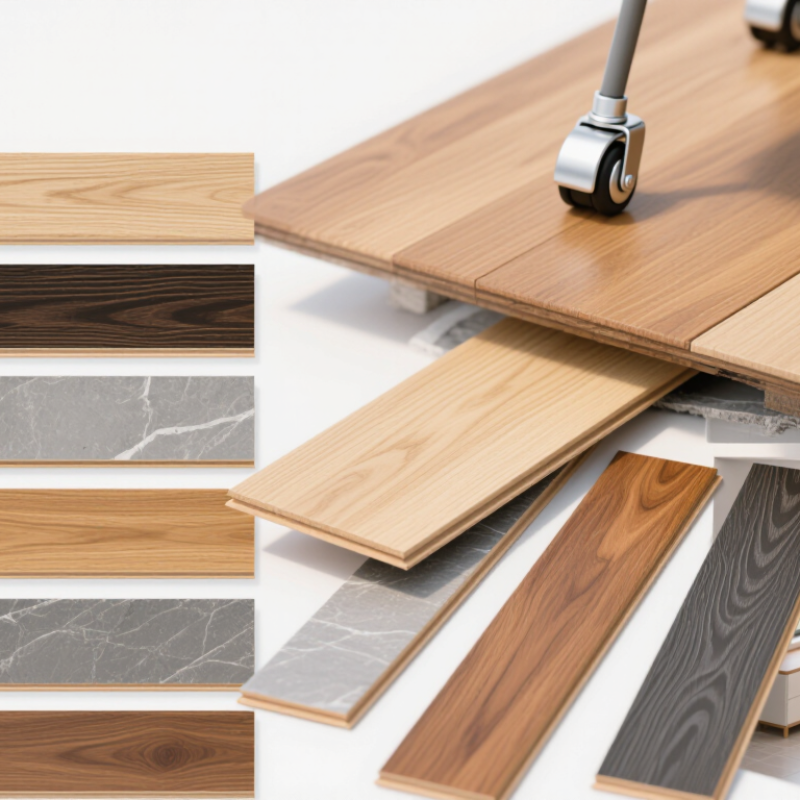
2026 Top Laminate Plank Types for Global Buyers

What Laminate Plank Flooring Is and How Its Layers Work

Laminate plank flooring is a manufactured floor covering designed to resemble materials such as wood. Each plank combines several layers under pressure. The visible surface is not a solid piece of timber. It is a printed decorative image protected by a clear wear layer. That top layer helps resist everyday scuffs, stains, and fading, though performance depends on its construction and care.

Beneath it, a dense core—often fiberboard—gives the plank its shape and strength. A stabilizing layer on the underside helps balance the plank and reduce movement. Some products include an attached underlay; others require a separate one. Check the installation instructions, because an added layer is not always suitable. The plank edges may also have a locking profile, allowing pieces to fit together without face nails.

The layer diagram can make the product seem simpler than it is. Small differences in core density, surface protection, and joint design can affect how a floor handles foot traffic and occasional spills. Laminate is not automatically waterproof. Moisture performance varies, so confirm the product’s stated limits before choosing it for kitchens or entryways. A sample under window light can also reveal how its printed grain and color look in a real room.

The Main Laminate Plank Types Available to Global Buyers in 2026

Global buyers generally compare laminate planks by core, surface finish, and resistance to moisture. Standard HDF-core planks suit dry living areas and offer a firm, familiar feel underfoot. Water-resistant versions use treated edges or tighter joint systems to slow swelling after small spills. They are not waterproof. High-pressure laminate uses a denser surface construction for demanding spaces, while embossed-in-register finishes align texture with the printed wood grain. That detail can make knots feel convincing beneath a fingertip.

Wear ratings help narrow choices, but they do not tell the whole story. EN 13329 classifies flooring for residential and commercial use, with tests covering properties such as abrasion and impact resistance. Buyers should check the declared use class, plank thickness, locking profile, and installation instructions together. A higher wear rating cannot compensate for a poorly prepared subfloor. A useful distinction.

Market conditions also affect sourcing decisions. The European Producers of Laminate Flooring reported 367.4 million square metres in European sales for 2023, down 7.8 percent from 2022. That decline makes stock availability and lead times worth confirming before specifying a type. For dry bedrooms, standard HDF may be adequate; kitchens and busy corridors call for closer review of joint protection and care requirements. Even “water-resistant” can mean different test periods, so ask for the product’s documented limits.

How Core, Surface, and Edge Designs Affect Performance

2026 Top Laminate Plank Types for Global Buyers
How Core, Surface, and Edge Designs Affect Performance

Laminate performance depends on how its layers work together. A dense HDF core usually supports firm, stable joints, while a balanced construction helps limit movement as indoor humidity changes. The decorative surface carries the visual pattern; its wear layer helps resist abrasion, stains, and everyday scuffs. ANSI/NALFA LF-01 evaluates laminate flooring across 10 performance areas, including impact, stain, and dimensional stability. That is a useful benchmark, not a guarantee that every product suits every room.

Edges deserve close inspection. Wax-treated or tightly machined joints can help reduce moisture entry, but they do not make a floor waterproof. A chipped corner on a sample plank may reveal more about handling durability than a glossy brochure can. I would compare joint fit, core density, and surface test results together. One caveat: a thicker core is not automatically a stronger floor; installation quality and subfloor flatness still matter.

Tips: Request the product’s test documentation and check its EN 13329 use class for the intended traffic level. Fit several sample planks, then inspect the seams under side lighting. Small gaps are easy to miss.

2026 Top Laminate Plank Types for Global Buyers

How core, surface, and edge designs affect performance

Surface abrasion classes indicate wear-test performance, not overall plank quality. Commonly cited minimum abrasion thresholds are shown; check the applicable EN 13329 edition and product documentation. Core density and construction influence stability and impact resistance, while sealed joints and edge profiles can affect moisture exposure at plank seams.

Key Factors for Comparing Laminate Planks Across Markets

Comparing laminate planks across markets starts with use conditions, not appearance. Two pale-oak samples may look alike but differ in core density, edge sealing, and locking geometry. The European Producers of Laminate Flooring reported 367.4 million square metres in European laminate sales for 2023, down 6.4% year on year. This is market context, not a quality score. It does show why buyers should check regional demand instead of assuming one specification suits every destination.

Compare wear classifications and test results under EN 13329, then check thickness, dimensional stability, and the stated use class. An AC rating alone cannot describe every performance factor. Easy to miss. A thicker plank is not automatically tougher; the full test report matters. Ask whether moisture claims cover spills, damp cleaning, or prolonged exposure, since these are different conditions. Compare emissions documentation using the destination market’s required test method; labels based on different methods may not be directly comparable. Finally, review carton dimensions, pallet weight, and replacement availability. A sample can pass a showroom test, while freight and installation conditions reveal a less convenient reality. That part deserves a second look.

2026 Top Laminate Plank Types for Global Buyers - Key Factors for Comparing Laminate Planks Across Markets

Plank Type Typical Construction Moisture Considerations Wear and Surface Options Common Applications Key Checks for Global Buyers
Standard HDF Laminate Decorative image and transparent wear layer over a high-density fibreboard (HDF) core, commonly supported by a balancing layer. Spills should be cleaned promptly. Conventional HDF cores and plank joints can be affected by prolonged moisture; suitability depends on the product specification and installation. Available in a range of printed wood, stone, and other visual designs. Surface texture and wear performance vary by product. Dry residential rooms and other interior areas permitted by the manufacturer. Check the declared wear class, thickness, locking profile, installation instructions, and local flooring standard. Do not assume that a thicker plank has a higher abrasion rating.
Moisture-Resistant HDF Laminate HDF-based laminate with moisture-focused core treatment, edge protection, joint design, or a combination of these features. May provide additional resistance to specified spills or humid conditions, but the permitted exposure time and test method are product-specific. It is not automatically suitable for standing water or flood-prone areas. Often offered in wood-look plank formats with surface finishes similar to standard HDF products. Residential rooms where occasional spills are a consideration, subject to the stated use conditions. Request the test method, exposure duration, installation requirements, warranty exclusions, and instructions for sealing or treating cut edges.
Waterproof-Claim Laminate Usually a laminate flooring system designed to limit water penetration through the surface or joints; core materials and system construction vary by manufacturer. The term “waterproof” is not a universal guarantee for every installation. Performance may depend on joint sealing, perimeter details, subfloor conditions, and how long water remains on the floor. May use conventional printed décor and a range of textured surfaces; appearance alone does not indicate water performance. Areas where the product is specifically approved for the expected exposure, following its installation and maintenance instructions. Ask what part of the floor is covered by the claim, the test conditions, maximum exposure period, treatment of edges and transitions, and whether the warranty covers water damage.
Direct-Pressure Laminate (DPL) Decorative paper and wear layer are pressed with the core during the manufacturing process. Many residential laminate floors use this construction. Moisture performance depends on the core, joints, edge treatment, and product design—not on the DPL label alone. Broad choice of printed designs and surface textures; wear class should be checked on the product documentation. Commonly used in residential flooring and in other settings where the product’s declared class is appropriate. Compare declared performance and test documentation rather than relying on construction terminology alone. Confirm the applicable standard for the destination market.
High-Pressure Laminate (HPL) Flooring A high-pressure decorative laminate layer is produced separately and bonded to a flooring core; the complete product construction varies. Water resistance still depends on the core, joints, edges, and installation. HPL construction by itself does not make the whole floor waterproof. Can be specified with a durable decorative surface. Actual abrasion, impact, and stain performance must be verified for the finished flooring product. Selected residential or commercial settings when the product’s tested performance and warranty match the intended use. Review the finished floor’s test results, wear classification, substrate details, joint system, and installation requirements—not just the surface-layer description.
Embossed-in-Register (EIR) Laminate A surface texture is aligned with the printed décor pattern to create a more coordinated tactile effect. EIR describes a surface treatment, not a core type. Moisture performance is determined by the underlying flooring construction and joint system, not by the registered texture. Often selected for a more pronounced wood-grain appearance. Texture and visual alignment can vary between product ranges. Residential and commercial interiors where the appearance and declared performance meet project requirements. Request physical samples, check décor repeat and plank-to-plank variation, and assess the product’s wear and moisture specifications separately.

Comparison note: Wear-class labels and test requirements can differ by market and product category. Where EN 13329 applies, AC classes are abrasion-resistance classifications; they do not by themselves establish water resistance, impact performance, or suitability for every commercial use. Confirm the current local requirements, technical data sheet, installation guide, and warranty for each product.

How to Match Plank Types to Climate, Use, and Installation Needs

2026 Top Laminate Plank Types for Global Buyers: Matching Climate, Use, and Installation

Climate should guide the core choice, not just the plank’s color. In humid regions, select laminate with clearly documented moisture resistance and tight locking joints. No laminate is immune to standing water. For concrete subfloors, check moisture conditions and use the vapor barrier specified for the flooring system. The U.S. Department of Energy’s Energy Saver guidance recommends indoor relative humidity of 30%–50%; that range can help buyers assess whether a space is routinely damp or overly dry. Still, indoor readings do not replace site moisture testing.

Match wear ratings to traffic. The North American Laminate Flooring Association’s AC rating system classifies AC3 for heavier residential or light commercial use, AC4 for general commercial use, and AC5 for heavy commercial settings. A busy shop entrance needs more abrasion resistance than a quiet bedroom. For homes, embossed planks can add texture, but deep grooves may collect grit. Click-lock floating floors can simplify installation and future plank replacement. They still need a flat, clean subfloor and the manufacturer’s required expansion gap. Small details matter. Follow the product’s acclimation instructions rather than assuming every plank needs the same waiting period. One compromise remains: a tougher surface may cost more, while a lower rating can wear sooner under rolling chairs and tracked-in sand.

Go to Top