Who Are the Best Cool Box Manufacturers in China?
Choosing the best Cool Boxes manufacturers in China requires more than comparing factory prices. It requires evidence.
Grand View Research valued the global coolers market at approximately USD 1.9 billion in 2023. Its report also projects steady growth through 2030, supported by outdoor recreation, food delivery, and commercial cold-chain demand. Mordor Intelligence similarly highlights insulation performance, portability, durability, and material innovation as major purchasing factors. These figures show opportunity, but they do not prove that every supplier can deliver consistent quality.
Roy Seiders, YETI co-founder, described his design philosophy clearly: “We wanted to make a cooler that was as tough as the boats we fish from.” That standard is useful when reviewing Chinese manufacturers. A serious supplier should explain its rotational-molding process, insulation thickness, lid compression, hinge testing, and production traceability. Factory photographs are not enough. Buyers should request test records, sample inspections, food-contact documentation, and evidence of repeat production quality.
Look closely at the details.
A strong Cool Boxes manufacturer should offer reliable temperature retention, clean internal surfaces, durable handles, and stable dimensions. Export experience also matters, especially when packaging, labeling, and destination requirements differ. Some factories appear impressive during sampling but struggle with color consistency, warped lids, or delayed shipments at scale. This is where many comparisons become imperfect. Public market reports measure demand, not factory honesty. Independent audits and physical samples remain essential.
This guide evaluates leading Chinese manufacturers through practical capabilities, product quality, customization options, certifications, and communication reliability. The ranking may not suit every buyer. A premium camping brand and a supermarket distributor need different partners.
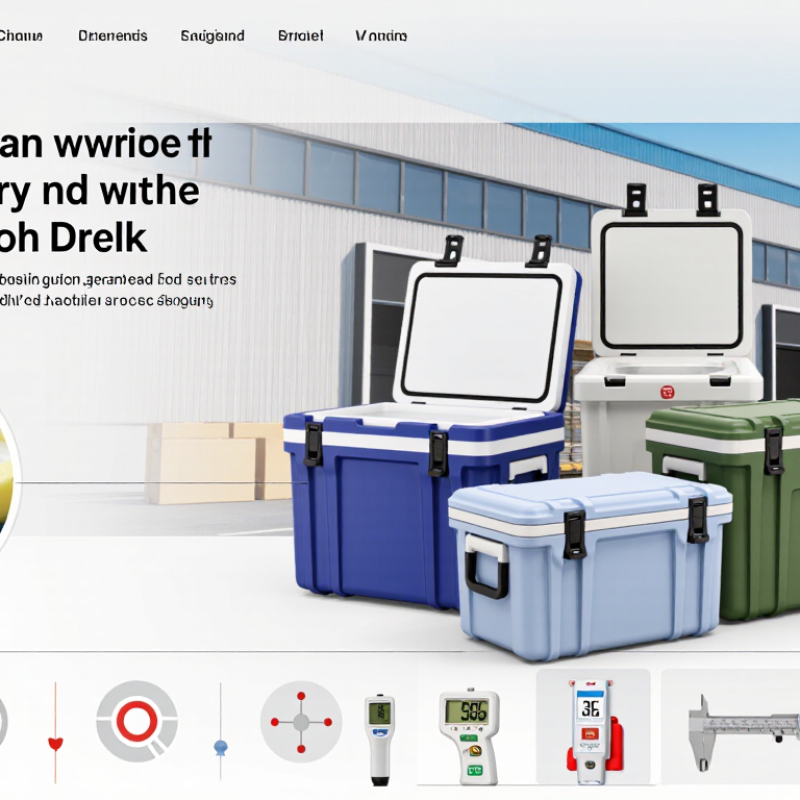
What Makes a Cool Box Manufacturer Stand Out in China?
What makes a cool box manufacturer stand out in China is measurable performance, not a polished catalog. China’s cold-chain logistics market reached approximately RMB 517.7 billion in 2023, according to the China Federation of Logistics Purchasing. This growth raises expectations for insulation, durability, and delivery consistency. Experienced manufacturers should explain foam density, wall thickness, gasket design, and tested temperature retention. Vague claims are not enough.
Strong suppliers usually combine engineering control with practical factory experience. They use stable molding processes, inspect lid alignment, and test hinges after repeated opening cycles. Thermal tests should follow recognized methods, such as ASTM D3103, while food-contact materials need traceable compliance documents. The World Bank’s 2023 Logistics Performance Index gave China a score of 3.7, showing a capable logistics environment, but transport quality still depends on careful packaging and dependable production schedules.
Ask for batch records, test videos, material certificates, and samples from normal production. A serious factory should discuss failure rates, not hide them. That honesty matters. Low prices can still attract buyers, yet thin insulation may create hidden losses during hot warehouse storage. No manufacturer is perfect. The better partner is one that measures weaknesses, corrects tooling problems, and shares evidence before signing a large order. Nakne data alone cannot replace hands-on inspection, and remote audits can miss details around seals, welds, and surface defects.
What Makes a Cool Box Manufacturer Stand Out in China?
A practical 100-point buyer evaluation model based on the factors commonly used when sourcing insulated cool boxes.
Product quality and thermal performance receive the highest weighting because they directly affect temperature retention, durability, and user safety. Reliable quality control, food-contact material compliance, customization capability, production capacity, and export experience are also important when evaluating a cool box manufacturer in China.
How to Evaluate China’s Leading Cool Box Manufacturers
Evaluating China’s leading cool box manufacturers requires more than comparing catalog prices. Grand View Research estimates the global insulated packaging market will grow at about 6% annually through 2030. That growth increases factory competition, but not necessarily quality. Request thermal-retention test reports, material specifications, and recent production samples. A reliable supplier should explain whether the box uses EPS, EPP, or polyurethane insulation. It should also provide wall thickness, usable volume, empty weight, and temperature results under defined test conditions.
Test the claims. Ask for tests based on recognized standards, such as ASTM or EN procedures, and check whether laboratories are independent. For food-contact applications, verify suitable documentation for the destination market. ISO 9001 certification can indicate controlled processes, but it does not prove strong insulation performance. Inspect mold seams, hinge alignment, gasket compression, drain plugs, and handle strength. Small flaws often become costly during transport.
The International Trade Centre’s Trade Map data shows China remains a major exporter of plastic and insulated transport products. However, export scale alone cannot measure factory capability. Evaluate audit records, defect rates, corrective-action reports, and production capacity during peak seasons. Ask how the manufacturer manages recycled content, packaging waste, and worker safety. A low quotation may exclude tooling, testing, spare parts, or inspection fees. I would also order a pilot batch before signing a large contract. One sample can look excellent. It may not represent every production shift.
Top Cool Box Manufacturers by Product Type and Specialization
China’s best cool box manufacturers are easier to compare by specialization than by factory size. Hard-sided manufacturers usually focus on rotational molding, thick insulation, and impact resistance. Their boxes suit fishing, camping, catering, and outdoor transport. Look for uniform wall thickness, tight lid seals, stainless-steel hinges, and drainage plugs. A heavy box is not automatically better.
Soft-sided specialists typically produce foldable coolers, lunch bags, and insulated delivery totes. Their strengths include low weight, printed fabrics, and flexible production runs. Ask about liner thickness, stitching density, zipper protection, and insulation recovery after repeated folding. The 2024 Grand View Research analysis of insulated cooler demand highlights portability and convenience as important purchase factors. That finding matches field experience, but factory claims still need physical testing.
Electric cool box manufacturers serve vehicle, medical, and mobile catering applications. They should demonstrate cooling curves, power consumption, noise levels, and performance under high ambient temperatures. Product-type specialists often provide better engineering depth than general factories. Cold-chain demand also supports this direction. MarketsandMarkets projects the global cold-chain market to expand strongly through 2028, increasing attention on temperature stability and monitoring. The 2023 Global Cooling Watch report warns that cooling demand could more than triple by 2050, making insulation efficiency increasingly important. A sample may look excellent. Weak handles can still fail quickly. Buyers should compare test records, material declarations, production audits, and after-sales response before selecting a Chinese manufacturer.
Manufacturing Standards, Customization, and Quality Control
Who Are the Best Cool Box Manufacturers in China?
Manufacturing Standards, Customization, and Quality Control
The strongest cool box manufacturers prove performance through documented standards, not attractive samples. The 2023 ISO Survey recorded 1,265,216 ISO 9001 certificates across 189 countries and economies. Certification alone is not enough. Buyers should inspect production records, corrective actions, and batch traceability. Reliable factories test insulation thickness, lid sealing, hinge strength, and temperature retention. Testing should follow recognized methods, such as EN 12546-2 for insulated containers where applicable. Internal procedures may still vary. Ask for recent test reports.
Customization should protect performance, not merely change colors or add logos. Experienced engineers can adjust cavity dimensions, wall geometry, handles, drains, and gasket compression. They should explain how each change affects thermal retention and tooling costs. The UNEP 2023 Cooling Emissions and Policy Synthesis Report warns that cooling demand could more than triple by 2050 without efficiency improvements. Better insulation and durable components therefore matter beyond marketing claims. Some suppliers promise extreme retention times without stating ambient temperature, ice load, or opening frequency. That is a weakness worth challenging.
Tips: Request a pilot batch before mass production. Measure internal temperature with calibrated data loggers. Check ten units, not one. Review material declarations and food-contact documentation when required. A factory audit should include molding areas, assembly lines, laboratories, and rejected-product storage. Photographs can mislead. On-site evidence is stronger. Do not ignore small defects; they often reveal process instability.
How to Choose the Right Chinese Cool Box Manufacturer for Your Needs
Who Are the Best Cool Box Manufacturers in China?
Choosing the right Chinese cool box manufacturer requires more than comparing prices. MarketsandMarkets estimates that the global cold chain packaging market will grow at about 8% annually through 2028. That growth increases supplier choices, but also increases quality risks. Ask for factory audit records, ISO 9001 certification, material specifications, and recent thermal test reports. A reliable supplier should explain whether the box uses EPP, EPS, polyurethane, or another insulation material. Request samples. Test them with the intended ice packs, product weight, and delivery route.
Temperature performance must match the real application. For chilled products, measure the internal temperature during a full shipping simulation, not only in a laboratory demonstration. Check lid fit, wall thickness, drainage design, stacking strength, and repeated-use durability. If food contacts the inner liner, request relevant food-contact compliance documents, including applicable Chinese GB standards. The World Health Organization recommends maintaining controlled temperatures during vaccine transport, showing why small temperature deviations deserve serious attention.
Production capacity also matters. Ask for monthly output, mold ownership, lead times, defect rates, and packaging methods. A factory may offer an attractive quotation but lack stable foam density or accurate molding. I once treated a low price as efficiency; it later created hidden replacement costs. My checklist is not flawless, either. Recheck assumptions with a pilot order, inspect random units, and compare actual data against promised performance before signing a large contract.