

China Best Light Teak Grain Wooden Venetian Blinds Supplier
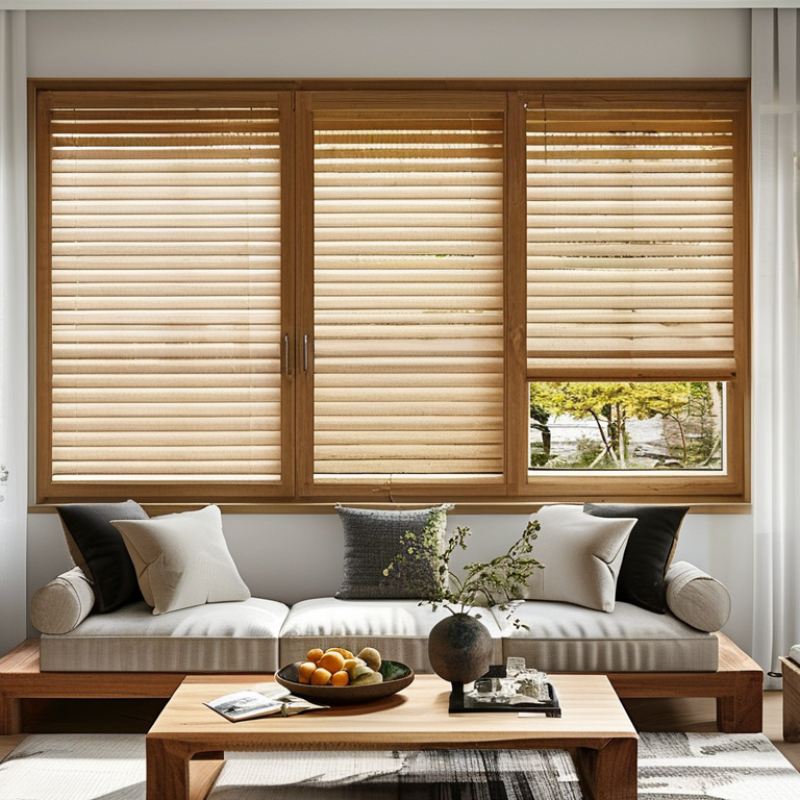
China Best Light Teak Grain Wooden Venetian Blinds Supplier introduces a practical choice for modern residential and hospitality interiors. These blinds combine warm teak-inspired color, adjustable daylight control, and the visual structure of natural wood. Their pale grain can soften white walls, stone surfaces, and brushed-metal hardware without appearing heavy.
Market demand is moving toward durable, repairable, and visually natural window coverings. Grand View Research reported that the global window coverings market was valued at approximately USD 31.76 billion in 2023. It also projected continued growth through 2030. The Freedonia Group has identified renovation, privacy, energy management, and decorative upgrades as important demand factors in window treatments. These findings support careful interest in Light Teak Grain Wooden Venetian Blinds, especially for buyers seeking coordinated interiors.
Material expertise still matters. Mike Snow, former executive director of the American Hardwood Export Council, has emphasized, “Wood is the only major building material that grows naturally and is renewable.” That principle requires responsible sourcing, not attractive wording alone. Buyers should verify wood species, moisture resistance, coating safety, slat thickness, tilt performance, and packaging standards. Light colors also reveal dust and uneven finishing more easily. That is not a failure, but a design reality. Supplier consistency can vary between batches. Sample approval is wise.
A dependable Chinese supplier should provide clear specifications, production photographs, inspection records, and responsive after-sales support. The strongest introduction is not merely about beauty. It connects grain appearance with measurable quality, responsible sourcing, and daily performance. Small details matter.
Product Definition and Key Features of Light Teak Grain Wooden Venetian Blinds
Light teak grain wooden Venetian blinds are interior window coverings made with horizontal wooden slats, ladders, and a tilt mechanism. Their pale teak-style surface brings warmth without making a room feel visually heavy. The grain pattern also adds texture, especially beside white walls, linen curtains, or natural stone.
Most designs use 25 mm or 50 mm slats. Wider slats create broader views and need fewer gaps when raised. Tilted slats can soften sunlight, reduce glare, and improve daytime privacy. A smooth cord or control system supports precise adjustment, while a durable coating helps protect the surface from dust and fading. However, these blinds are not maintenance-free. Wood can react poorly to constant moisture, so bathrooms and humid kitchens require careful product selection.
During installation, accurate measuring matters more than many buyers expect. The frame should be checked for depth, level, and opening direction before production. A slight measurement error may cause rubbing or uneven light gaps. Regular dusting with a dry microfiber cloth usually protects the finish. Avoid soaking the slats. In my view, the best light teak grain blinds balance appearance, stable operation, and realistic maintenance needs, rather than focusing only on color. Samples should be inspected in daylight because artificial lighting can make the grain look warmer or darker.
China Best Light Teak Grain Wooden Venetian Blinds Supplier - Product Definition and Key Features of Light Teak Grain Wooden Venetian Blinds
| Data Dimension | Product Data | Definition or Key Feature |
|---|---|---|
| Product Category | Wooden Venetian blind | An interior window covering made from horizontal wooden slats connected by ladder cords or tapes and controlled by lift and tilt mechanisms. |
| Wood Species | Natural wood or engineered wood, depending on the selected construction | Natural wood provides authentic grain variation, while engineered wood can offer improved dimensional consistency in changing indoor humidity. |
| Surface Appearance | Light teak grain finish with warm beige, honey, or soft golden-brown tones | The light wood appearance adds visual warmth and can complement neutral, contemporary, coastal, and naturally styled interiors. |
| Common Slat Widths | Approximately 25 mm, 35 mm, 50 mm, and 63 mm | Different slat widths affect the visual scale, outside-view control, and amount of natural light entering the room. |
| Slat Orientation | Horizontal | Horizontal slats allow the blind to be raised or lowered and tilted to adjust daylight, privacy, and outward visibility. |
| Light Control | Adjustable through slat tilt and blind height | Tilting the slats changes the direction and intensity of daylight; fully closed slats provide stronger glare and privacy control than partially open slats. |
| Privacy Control | Low to high privacy, depending on slat angle and closure | Closed or angled slats help limit direct views into the room while still allowing the user to manage daylight levels. |
| Thermal Contribution | A supplementary insulating layer at the window | Wood slats can reduce direct solar exposure and provide some resistance to heat transfer, although performance depends on window type, installation, and room conditions. |
| Operating Methods | Cord lift, cord-and-wand control, continuous cord loop, or motorized operation | The operating method can be selected according to window size, user convenience, accessibility requirements, and safety considerations. |
| Control Direction | Two-way slat tilting with vertical raising and lowering | The tilt function manages light and privacy, while the lift function exposes or covers the window area. |
| Typical Mounting Options | Inside mount or outside mount | Inside mounting creates a clean integrated appearance; outside mounting can help cover the window recess and may reduce side light gaps. |
| Headrail Function | Houses the tilt mechanism, lift components, and operating hardware | A properly sized headrail supports smooth operation and helps distribute the blind’s weight across the mounting brackets. |
| Color Coordination | Light teak tones with optional matching or contrasting tapes and cords | The finish can be coordinated with flooring, furniture, cabinetry, wall colors, and other wood elements in the room. |
| Surface Protection | Protective paint, stain, or clear coating suitable for interior applications | A suitable coating helps enhance the grain appearance and protects the slats from normal indoor dust, handling, and light exposure. |
| Cleaning Method | Dusting with a soft cloth, feather duster, or vacuum brush attachment | Routine dry cleaning helps prevent dust accumulation; excessive water and harsh chemical cleaners should generally be avoided on wooden slats. |
| Recommended Indoor Use | Living rooms, bedrooms, studies, dining areas, and offices | The product is best suited to dry interior spaces where natural wood aesthetics and adjustable daylight control are required. |
| Moisture Consideration | Use with care in kitchens, bathrooms, and high-humidity environments | Prolonged exposure to moisture may cause wood components to swell, warp, or deteriorate; ventilation and manufacturer-approved materials are important in humid areas. |
| Measurement Requirements | Window width, window height, recess depth, and mounting position | Accurate measurements help determine suitable blind dimensions, mounting clearance, slat orientation, and expected light gaps. |
| Main Advantages | Natural appearance, adjustable daylight, privacy control, and durable construction when properly maintained | Light teak grain wooden Venetian blinds combine functional window control with a warm decorative finish suitable for a wide range of interior styles. |
| Important Selection Factors | Slat width, wood construction, coating, control type, mounting method, and room humidity | Evaluating these factors helps match the blind with the window size, interior design, operating preference, safety needs, and environmental conditions. |
Note: Dimensions, materials, operating systems, and finish options may vary according to the specified window size, installation requirements, and product configuration.