

Choosing a Hex Machine Screw is a small decision with serious engineering consequences. A thread that looks correct may still fail under vibration, corrosion, or uneven clamping. The head may fit the tool, yet the screw may not suit the joint.
Grand View Research valued the global industrial fasteners market at approximately USD 88.43 billion in 2023. Its report also projects continued growth through 2030. This expansion reflects demand from automotive, machinery, electronics, and construction applications. However, market growth does not make every screw interchangeable. Standards still matter. ASME B18.6.3 and ISO 1580 define important dimensional requirements for machine screws.
John H. Bickford, a widely cited fastener engineering author, wrote, “A fastener is part of a joint, not the whole joint.” That principle deserves attention. Selecting a Hex Machine Screw involves more than counting threads or matching a head shape. Material grade, diameter, thread engagement, drive style, coating, and operating temperature can change performance. Torque alone cannot rescue a poorly designed joint.
The following seven tips examine those decisions through practical details. Consider a stainless screw entering an aluminum housing, or a plated screw exposed to moisture. The same size may behave differently in each setting. Some recommendations are easy to apply. Others require drawings, supplier certificates, and testing. That is where this topic becomes less tidy. A checklist helps, but it should never replace engineering judgment.
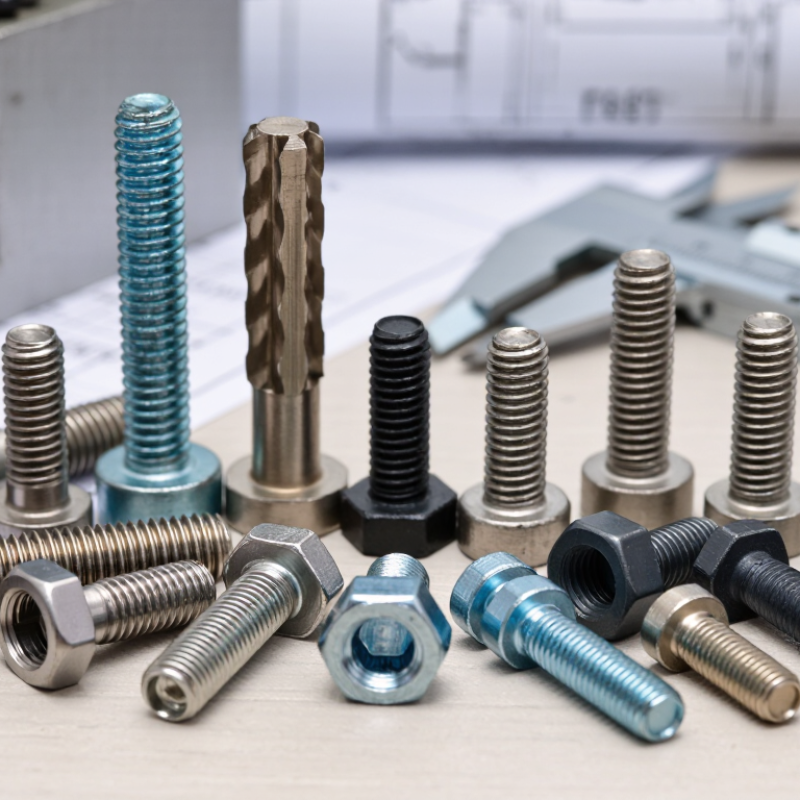
7 Tips for Choosing Hex Machine Screws?
Understanding hex machine screw design starts with the joint, not the catalogue. Select thread diameter, pitch, length, head clearance, material, strength class, and finish. A screw that looks oversized may still fail when threads engage poorly. I have seen this in maintenance work.
Hex heads provide wrench access in narrow assemblies. Their six flat faces spread torque better than damaged slotted drives. Check the required tightening torque and tool clearance around the head. For high-load steel joints, ISO 898-1 lists property class 8.8 at 800 MPa minimum tensile strength. That figure matters, but preload, washer use, and clamping thickness matter too. Do not treat strength class as a complete design answer.
Corrosion changes the decision. World Steel Association’s World Steel in Figures 2024 reports 1,892.2 million tonnes of crude steel production in 2023. Steel remains widely used, yet untreated surfaces can rust around outdoor joints. Choose stainless steel or a suitable protective coating after checking galvanic compatibility. ASTM F606/F606M testing can verify tension, proof load, and hardness for applicable fasteners. Measure the real assembly. A paper specification is not enough. One overlooked issue is thread contamination; dust or excess coating can distort torque readings. The easy choice can fail.
Nominal tensile load capacity increases with the tensile stress area of the thread. The chart uses common ISO metric coarse-thread sizes with property class 8.8 fasteners. Select the screw size, length, head style, material, and corrosion protection according to the joint load, installation access, environment, and required safety factor.
Approximate nominal tensile capacity is calculated from ISO metric tensile stress area × 800 MPa, the nominal ultimate tensile strength for property class 8.8. Actual joint capacity depends on preload, thread engagement, material strength, loading direction, installation accuracy, and safety factors.
Choosing hex machine screws starts with the load, not the screw drawer. Separate tension, shear, vibration, and impact forces. A screw carrying repeated movement needs more consideration than one holding a quiet panel. Check the required thread diameter, strength class, and safety factor against reliable engineering data. Do not guess from appearance. A thicker screw is not automatically the right solution.
Environmental details matter just as much. Identify moisture, salt spray, chemicals, heat, and outdoor exposure before selecting material or coating. Dissimilar metals can create galvanic corrosion, especially near damp joints. Check thread compatibility and allow enough clearance for assembly. Seven useful checks are load, vibration, material, corrosion, temperature, size, and service access. I have seen clean-looking screws fail because water remained trapped beneath a washer.
Installation can decide whether a suitable screw performs well. Prepare a correctly sized hole and provide adequate thread engagement for the base material. Keep the screw straight; cross-threading quietly weakens the joint. Use a washer when the head may damage a soft surface. Tighten with a calibrated tool and follow the applicable technical specification. Recheck critical joints after initial operation. This step is often skipped. It should not be. Inspect for stripped threads, head damage, loosening, and unexpected movement during maintenance. Record the screw material, size, tightening method, and inspection date for dependable future replacement.
Selecting the Right Material, Finish, and Corrosion Protection
Selecting hex machine screws is less about appearance than exposure, load, and maintenance. Start with the base material. Carbon steel suits dry indoor assemblies and demanding loads. Stainless steel performs better near moisture, washdown areas, and outdoor equipment. For high stress, verify tensile strength instead of guessing from appearance.
Match the finish to the environment. Zinc plating can protect screws in ordinary indoor conditions, but it may deteriorate near saltwater or chemical vapors. A thicker protective coating offers more resistance, yet it can change thread dimensions. I have seen coated screws bind during installation because the finish was never checked against the nut. Test a small sample first. It saves rework.
Think about galvanic corrosion when joining different metals. A stainless screw against aluminum may need an insulating washer or suitable barrier compound. Check coating thickness, salt-spray data, temperature limits, and supplier inspection records. Reliable documentation matters more than polished packaging. Apply the correct torque, then inspect threads for galling, flaking, or discoloration. Small defects matter. Do not ignore drainage, either; trapped water can defeat an excellent finish. I sometimes favor stainless steel too quickly, but its strength, cost, and compatibility still require careful review. A screw that looks clean today may fail inside a damp, hidden joint.
7 Tips for Choosing Hex Machine Screws
Matching thread size is the starting point for a dependable hex machine screw connection. Measure the mating hole, then confirm the thread diameter and pitch with a gauge. A screw can look correct yet bind after two turns. I have seen this happen when coarse and fine threads were confused. Check the drawing or equipment specification before ordering.
Measure length from beneath the head, not from the tip of the head. Allow enough engagement for secure holding, but avoid a screw that bottoms out inside a blind hole. A simple depth check can prevent damaged threads. Head style matters when space is limited. Socket heads suit recessed areas, while hex heads need wrench clearance above the assembly. Low-profile options may solve access problems, but they can provide less tool engagement.
Drive type should match the available tool and required torque. Internal hex drives work well in narrow spaces, while external hex drives are easier to service with gloves. Inspect the recess carefully. A rounded drive can reduce torque and complicate removal. Select a compatible strength class and material for the load, temperature, and surrounding environment. Stainless steel may resist corrosion, but it is not automatically the best choice for every joint. Test one screw in the actual assembly before buying in bulk. That small step is easy to skip. It is also where many avoidable mistakes appear.
| Tip | Selection Dimension | Reliable Reference Data | How to Choose | Typical Example |
|---|---|---|---|---|
| 1 | Match the Thread System | Metric threads are specified by nominal diameter and pitch, such as M4 × 0.7. Unified inch threads are specified by major diameter and threads per inch, such as #10-24 UNC. | Use the same thread system as the tapped hole or nut. Do not substitute a metric screw for an inch-threaded hole, or mix coarse and fine threads of the same diameter. | M4 × 0.7 for a metric tapped hole; #10-24 UNC for a compatible inch-threaded hole. |
| 2 | Verify Nominal Diameter and Pitch | Common metric machine-screw sizes include M3 × 0.5, M4 × 0.7, M5 × 0.8, and M6 × 1.0. A smaller pitch number indicates finer thread spacing. | Measure an existing screw with a thread gauge or confirm the tapped-hole specification. The diameter must fit the hole while the pitch must match exactly. | M5 × 0.8 is suitable only for an M5 tapped hole with a 0.8 mm pitch. |
| 3 | Calculate the Required Length | For a screw passing through a clearance hole, required length is approximately: grip thickness + washer thickness + nut height. For a tapped hole, allow sufficient thread engagement without bottoming out. | Measure the total material stack and select the nearest standard length. Avoid a screw that is too short to engage the threads or so long that it contacts the bottom of a blind hole. | A 6 mm material stack with a 1 mm washer may use an approximately 8–10 mm screw, subject to the hole and engagement requirements. |
| 4 | Select the Head Style | Hex-head screws provide external wrench access. Socket-head screws use an internal hex drive and generally have a smaller head diameter with a taller head. Low-profile socket heads reduce protrusion where clearance is limited. | Choose a hex head for accessible wrench installation, a socket head for compact assemblies, or a low-profile head where overhead clearance is restricted. | Hex head: open-access equipment. Socket head: recessed or compact assemblies. Low-profile socket head: limited clearance. |
| 5 | Match the Drive Type to Access | External hex drives are installed with a wrench or socket. Internal hex drives require a correctly sized hex key or bit. The tool must fully seat in the drive recess to reduce rounding. | Use an external hex drive when side access is available. Use an internal hex drive when the fastener is recessed or when a smaller installation envelope is needed. | An M6 external-hex screw can be installed with a suitable socket; an M6 socket-head screw uses an internal hex key sized for its drive. |
| 6 | Choose Material and Finish for the Environment | Carbon-steel screws are commonly used for general mechanical assemblies. Stainless-steel screws provide improved corrosion resistance in many environments. Zinc or other protective coatings can improve corrosion resistance on compatible steel fasteners. | Consider moisture, chemicals, temperature, magnetic requirements, and galvanic-corrosion risk. Confirm that the selected material and coating meet the application specification. | Stainless steel: damp or exposed areas. Coated carbon steel: general indoor machinery. Avoid incompatible material pairs in conductive, wet environments. |
| 7 | Confirm Engagement, Clearance, and Torque | The screw should engage the full usable thread length without bottoming out. The head and tool need adequate clearance, and installation torque must follow the applicable engineering or fastener specification. | Check hole depth, thread engagement, head diameter, wrench clearance, and any washer requirement before ordering. Do not estimate torque solely from screw diameter. | For a blind tapped hole, select a length that leaves clearance at the bottom. For a through-hole joint, verify that the exposed thread beyond the nut is adequate but not excessive. |
Specification note: Dimensions shown are representative examples. Always verify the applicable fastener standard, material grade, thread tolerance, strength requirement, and installation torque for the specific assembly.
7 Tips for Choosing Hex Machine Screws?
Verifying Standards, Quality, and Fit Before Purchase
A hex machine screw should match the drawing, not just the photograph. Check the diameter, thread pitch, length, head size, and drive dimensions before ordering. Confirm whether the specification follows ISO, ASME, or another required standard. Thread compatibility matters; a nearly matching pitch can still damage a tapped hole. Measure the mating hole with a gauge when possible. Small errors become expensive during assembly.
Review the material and strength class for the working environment. Stainless steel may resist moisture, while alloy steel may offer higher tensile strength. Check the stated hardness, coating, and corrosion test details. Ask for a certificate of conformity and traceability records. Inspect sample screws for clean threads, sharp hex corners, and an even finish. Reject pieces with burrs or damaged plating. They may fail under torque.
Fit also depends on clearance and tool access. Leave enough space for the wrench or socket around the hex head. Select a length that provides adequate thread engagement without extending into moving parts. A washer may help distribute pressure on softer surfaces. I once focused too much on screw strength and overlooked tool clearance; installation became awkward. That mistake still influences my checks. Do not trust a supplier’s size label alone. Compare the actual dimensions with your assembly drawing, and test a small batch before purchasing in volume.