
Choosing the right shipping container kitchen supplier requires more than comparing glossy photographs and advertised prices. This guide introduces China’s top ten suppliers through practical, buyer-focused criteria. We examine design capability, food-grade materials, insulation, ventilation, electrical planning, plumbing, fabrication quality, certifications, delivery experience, and after-sales support.
A reliable supplier should explain how stainless-steel worktops, non-slip flooring, extraction hoods, grease traps, and fire-resistant panels fit together. Ask for factory videos, welding photographs, kitchen layouts, test records, and references from completed projects. Details matter. A poorly positioned sink can slow service. Weak insulation can create uncomfortable heat inside the container. Delayed replacement parts can damage a new food business.
Architect Adam Kalkin, known for container architecture, described the container as “a very simple, very powerful object.” That observation remains useful for commercial kitchens. The structure is compact, but the working environment is demanding. Each supplier must balance mobility, hygiene, safety, energy use, and local installation requirements.
This ranking is not a universal verdict. A supplier suited to a coffee kiosk may not fit a high-volume catering operation. Prices can also change with equipment brands, container size, customization, shipping routes, and compliance requirements. Some websites look impressive. Their technical documentation may be thinner.
We therefore encourage readers to verify drawings, materials, production schedules, and certification claims directly. The strongest suppliers communicate clearly before receiving an order. They also admit limitations. That is a good sign. Our comparison aims to help investors, caterers, and project managers select a dependable shipping container kitchen partner with fewer expensive surprises.
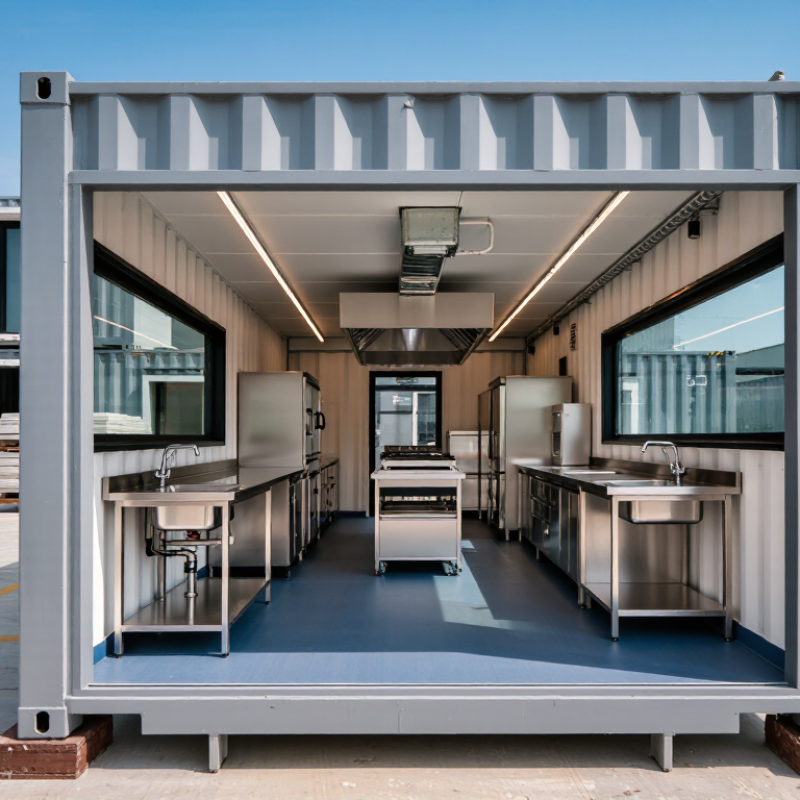
Shipping container kitchens are prefabricated food preparation spaces built inside reinforced steel containers. They are usually manufactured in controlled workshops, then transported to a site and connected to utilities. This approach can reduce construction time and simplify quality checks. However, a container is not automatically a safe kitchen. Its original flooring, coatings, and insulation may need replacement.
Inside, the layout typically includes food preparation benches, sinks, storage, cooking equipment, ventilation, lighting, and drainage. Clean water enters through a fixed supply line, while wastewater leaves through a sealed drainage system. Electrical circuits must support ovens, refrigerators, extraction fans, and other high-load appliances. Gas systems, when permitted, require professional installation, leak testing, and adequate ventilation. Fire-resistant materials and emergency access also matter.
In practical use, staff move between receiving, preparation, cooking, washing, and storage zones. Good suppliers measure this workflow before designing the interior. Stainless steel surfaces are easy to clean, but they can show dents and fingerprints quickly. Space remains limited. That trade-off is real. A large oven may reduce storage, while extra refrigeration can restrict movement. Buyers should inspect welds, insulation, drainage slopes, ventilation performance, and maintenance access before delivery. Some designs look efficient on paper but feel cramped during busy service. Field testing with real equipment and staff often reveals problems that drawings miss.
When evaluating Chinese container kitchen suppliers, start with evidence, not attractive renderings. The World Bank’s Logistics Performance Index 2023 gave China a score of 3.7, ranking it 19th globally. This supports strong logistics capacity, but it does not prove a supplier can build a safe kitchen. Request factory videos, production records, material certificates, and references for comparable projects.
Inspect the container structure closely. Check weld continuity, corner-post alignment, roof drainage, insulation thickness, and door sealing. Food-contact surfaces should have traceable stainless-steel grades and smooth, cleanable joints. Ask for electrical load calculations, ventilation rates, fire-safety test records, and water-pressure tests. A supplier should explain maintenance access, replacement parts, and installation tolerances in writing. Vague answers are warning signs.
Delivery planning also deserves attention. UNCTAD’s Review of Maritime Transport 2024 reported global seaborne trade at about 12.3 billion tons in 2023, with disruption risks affecting schedules and costs. Compare suppliers using total landed cost, not factory price alone. Include inland transport, port handling, packaging, commissioning, and spare equipment. The World Bank data is useful, but national logistics performance cannot replace a site audit. My own assessment would include a witnessed factory acceptance test, although even that can miss problems after installation. Photographs may look convincing. Kitchen performance is proven by airflow, temperature stability, drainage, and daily cleaning under real operating conditions.
China’s Top 10 Shipping Container Kitchen Suppliers
should be assessed through performance, not catalogue size. UNCTAD’s Review of Maritime Transport 2024 records about 12.3 billion tonnes of seaborne trade in 2023. That scale keeps container availability and transport efficiency important for modular kitchens. Strong suppliers usually offer insulated steel shells, washable wall panels, tested plumbing, and factory wiring. They should also provide drawings, load calculations, material certificates, and clear installation instructions.
Look for suppliers experienced in converting ISO-compliant containers into food-service spaces. ISO 668 defines key container dimensions, while ISO 1496 covers structural and testing requirements. These standards do not automatically prove kitchen safety. Buyers still need documented fire ratings, electrical protection, drainage design, and food-contact material information. A reliable factory should show inspection records, sample welds, door seals, ventilation layouts, and photographs from completed projects. Details matter. A poorly positioned sink can disrupt the entire workflow.
The top ten shortlist should include suppliers with repeatable quality control and transparent export experience. Ask about steel thickness, insulation density, corrosion treatment, appliance testing, and replacement-part support. Industry reports often describe modular construction as faster than conventional building, but site preparation can erase that advantage. This is where many comparisons become too optimistic. Delivery time, crane access, local permits, and utility connections must be priced separately. A supplier may look inexpensive until the first modification appears. Verify every assumption before signing.
China Top 10 Shipping Container Kitchen Suppliers: How to Compare Products, Prices, Certifications, and Services
A serious comparison starts with the kitchen’s use, not the supplier’s catalogue. Check container dimensions, insulation, ventilation, drainage, cooking load, and daily meal volume. ISO 668 defines standard freight-container dimensions, while the CSC Convention governs container safety for international transport. Ask for drawings, steel grades, appliance models, electrical diagrams, and a measured equipment list. A shiny rendering proves little.
Price comparisons should use the same specification. Request factory price, export packing, inland transport, ocean freight, insurance, installation, and spare parts separately. UNCTAD’s Review of Maritime Transport 2024 reports that over 80% of global merchandise trade by volume moves by sea, so freight volatility can change the landed cost quickly. A quote without validity dates is weak. I would also compare payment stages, testing procedures, warranty limits, and response times. The cheapest offer often hides missing extraction fans or unsuitable power systems.
Certification needs practical checking. Request current certificates, test reports, and serial-number links, then verify whether they cover the exact equipment. Food-contact surfaces should have documented material compliance, not merely “304 stainless steel” in an email. Electrical products may require destination-market conformity evidence, while gas systems need local approval and professional installation. ISO 9001 can indicate controlled processes, but it does not guarantee good cooking performance. Insist on factory acceptance testing with water, heat, ventilation, and drainage checks. I have seen attractive specifications fail during commissioning. That uncomfortable detail matters.
| Rank | Anonymous Supplier Profile | Typical Product Configuration | Common Container Sizes | Main Construction Materials | Indicative FOB Price Range | Estimated Production Lead Time | Typical MOQ | Certification and Documentation to Request | Customization Capability | After-Sales Service |
|---|---|---|---|---|---|---|---|---|---|---|
| 1 | Profile 01 – High-Capacity Commercial Kitchen | 40 ft modified container with cooking line, preparation area, extraction system, sinks, cold storage, and service counter | 20 ft, 40 ft, 40 ft High Cube | Weathering steel container shell, 304 stainless steel food-contact surfaces, mineral-wool or PU insulation | US$35,000–75,000 | 8–14 weeks | 1 complete unit | Container structural documents, electrical test report, material certificates, equipment manuals, and applicable food-contact declarations | Layout, power supply, ventilation, branding panels, windows, doors, and equipment selection | Remote commissioning, spare-parts list, installation drawings, and 12-month workmanship warranty |
| 2 | Profile 02 – Modular Food-Service Kitchen | 20 ft container with cooking equipment, stainless worktables, hand-wash station, drainage, and compact storage | 10 ft, 20 ft, 40 ft | Steel frame, insulated sandwich panels, 304 stainless steel counters, non-slip commercial flooring | US$22,000–48,000 | 7–12 weeks | 1 unit or 1 project | Wiring diagram, load schedule, welding and material records, equipment conformity documents, and packing list | Moderate; menu-based layouts, serving windows, colors, counters, and utility locations | Video inspection, commissioning checklist, replacement-part support, and remote troubleshooting |
| 3 | Profile 03 – Outdoor Catering Kitchen | 20 ft container with serving hatch, griddle or fryer line, refrigeration, fresh-water tank, and waste-water tank | 10 ft, 20 ft | Corrosion-protected steel, stainless steel work surfaces, insulated wall and ceiling panels | US$18,000–40,000 | 6–10 weeks | 1 unit | Electrical safety test, plumbing diagram, tank specifications, fire-safety provisions, and equipment certificates | High; serving windows, external counters, graphics, menus, and event-specific equipment | Operating manuals, remote support, spare consumables guidance, and warranty claim process |
| 4 | Profile 04 – Premium Restaurant Extension | 40 ft High Cube kitchen with heavy-duty cooking line, dishwashing zone, cold room, dry store, and staff area | 40 ft, 40 ft High Cube | Insulated steel shell, 304 or 316 stainless steel in selected areas, commercial resin or vinyl flooring | US$50,000–110,000 | 10–18 weeks | 1 project | Structural calculations, electrical single-line diagram, ventilation design, fire-suppression documentation, and equipment test reports | Very high; engineering-led design, equipment integration, and site-specific utility planning | Installation supervision, commissioning, operator training, and extended warranty options |
| 5 | Profile 05 – Standard Fast-Food Unit | 20 ft unit with standardized fryer, grill, refrigeration, extraction hood, hand sink, and customer-facing counter | 20 ft | Painted steel exterior, insulated panels, 304 stainless steel preparation and cooking surfaces | US$20,000–42,000 | 6–10 weeks | 1–2 units | Factory inspection report, electrical test report, component datasheets, packing specification, and installation guide | Standard customization of equipment, counter arrangement, colors, windows, and signage panels | Remote support, replacement parts, troubleshooting videos, and standard warranty terms |
| 6 | Profile 06 – Bakery and Pastry Kitchen | 20 ft or 40 ft unit with ovens, mixers, proofing cabinet, stainless preparation benches, and ingredient storage | 20 ft, 40 ft | Insulated container structure, stainless steel benches, washable wall panels, anti-slip flooring | US$28,000–65,000 | 8–14 weeks | 1 unit | Oven and mixer conformity documents, electrical load data, food-contact material declarations, and cleaning instructions | High; production flow, equipment capacity, racks, shelving, and utility requirements | Equipment manuals, commissioning support, recipe-capacity guidance, and spare-parts assistance |
| 7 | Profile 07 – Beverage and Café Container | 10 ft or 20 ft unit with beverage counter, under-counter refrigeration, water filtration, sinks, and serving hatch | 10 ft, 20 ft | Steel shell, insulated panels, stainless steel counter, washable interior lining | US$12,000–30,000 | 5–9 weeks | 1 unit | Refrigeration datasheets, electrical safety report, plumbing diagram, water-system specifications, and packing list | High; counter design, windows, shelving, water system, lighting, and exterior finish | Remote installation guidance, maintenance schedule, and replacement-component support |
| 8 | Profile 08 – Institutional Catering Unit | 40 ft kitchen designed for schools, construction sites, offices, or staff dining operations | 20 ft, 40 ft, 40 ft High Cube | Heavy-duty steel frame, insulated panels, stainless steel food-contact zones, industrial-grade flooring | US$38,000–85,000 | 9–16 weeks | 1 project or 2 units | Capacity calculations, ventilation and drainage drawings, electrical documentation, fire-safety records, and inspection reports | High; workflow, serving capacity, menu type, storage, and utility configuration | Project documentation, installation coordination, staff training, and scheduled maintenance support |
| 9 | Profile 09 – Export-Oriented Turnkey Unit | Container kitchen supplied with coordinated drawings, export packing, utility connections, and installation documentation | 20 ft, 40 ft, 40 ft High Cube | Container-grade steel, insulated panels, 304 stainless steel, sealed commercial flooring | US$25,000–80,000 | 8–15 weeks | 1 unit | Commercial invoice, packing list, electrical test report, product manuals, material records, and destination-market conformity documents | Very high; can be adapted to local voltage, layout, ventilation, and import requirements | Pre-shipment inspection, export documentation, remote commissioning, and spare-parts planning |
| 10 | Profile 10 – Budget Starter Kitchen | 10 ft or 20 ft basic kitchen with simple cooking line, sink, workbench, storage, and electrical installation | 10 ft, 20 ft | Painted steel shell, insulated panels, stainless steel worktop, basic commercial flooring | US$10,000–25,000 | 4–8 weeks | 1 unit | Basic wiring diagram, equipment datasheets, material specification, inspection checklist, and packing documents | Limited to moderate; best suited to standard layouts and readily available equipment | Basic remote support, operating instructions, and standard replacement parts |
Before ordering a container kitchen from China, verify the supplier beyond its online catalog. UNCTAD’s Review of Maritime Transport reports that over 80% of global merchandise trade by volume moves by sea. Shipping conditions matter. Ask for the container’s ISO 668 dimensions, tare weight, payload, and center-of-gravity calculation. Request recent factory videos, welding photos, and a live video inspection. A polished rendering proves very little.
Check the kitchen’s technical package line by line. It should show stainless-steel grades, insulation thickness, floor loading, ventilation capacity, drainage routes, electrical diagrams, and equipment ratings. Confirm whether gas, electrical, fire-safety, and hygiene requirements match the installation country. The World Bank’s Logistics Performance Index 2023 evaluates customs, infrastructure, shipment quality, and delivery reliability. These factors affect your landed cost, not only the supplier’s quotation. Include drawings, inspection points, spare-part lists, and acceptance criteria in the contract.
Request a factory acceptance test before shipment. Test doors, sinks, extraction fans, refrigeration, lighting, and control panels under working conditions. Record serial numbers and photographs. Ask about corrosion protection around cut edges and roof penetrations. Small details become expensive after arrival. I once trusted a dimension sheet too quickly; the service clearance was unusable. That mistake still bothers me. Allow contingency for port delays, inland transport, installation, and local modifications. A low unit price may hide weak documentation, limited after-sales support, or unsuitable components. Be careful.