Top Outdoor WPC Wall Panel Manufacturers for Global Buyers
Global buyers need more than attractive samples when selecting an Outdoor Wpc Wall Panel manufacturer. They need stable quality, clear specifications, and dependable after-sales support. A panel may look excellent under showroom lighting, yet perform poorly beside a humid coastline. Small details matter. Check the core density, surface texture, color consistency, water absorption, UV resistance, and fastening system before comparing prices.
Ethan Liu, a composite-cladding consultant with experience in international building projects, explains, “A reliable wall panel is judged after years outdoors, not after one impressive sample.” His point is practical. Leading manufacturers should provide tested performance data, installation guidance, batch records, and transparent warranty conditions. Global buyers should also review production capacity, packaging protection, export experience, and communication speed. A damaged corner can affect an entire container shipment.
This guide examines top Outdoor Wpc Wall Panel manufacturers for international purchasers. It considers material formulation, extrusion accuracy, surface finishes, customization options, certification practices, and project support. Factory photographs are useful, but they are not proof. Independent test reports and recent customer references are stronger evidence. No ranking is flawless. Supplier capabilities can change, and regional climate conditions vary. That limitation deserves attention.
Some manufacturers excel in residential facades. Others perform better in hotels, balconies, commercial entrances, or high-moisture environments. The right choice depends on exposure, maintenance expectations, budget, and local installation skills. Look beyond the lowest quotation. Long-term value often hides in consistent dimensions, replaceable profiles, and responsive technical service.
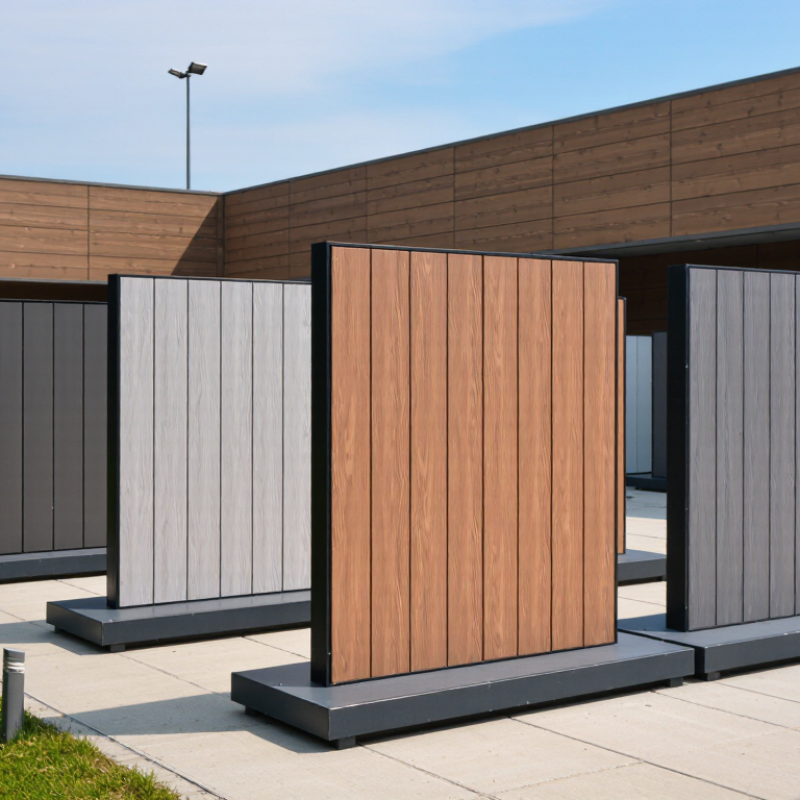
What Is Outdoor WPC Wall Paneling?
Outdoor WPC wall paneling combines wood fibers or flour with thermoplastic polymers and performance additives. Manufacturers form this mixture into solid or hollow profiles for exterior cladding, privacy screens, and decorative façades. The surface may imitate timber grain, while the polymer helps reduce water absorption and routine repainting.
According to Grand View Research, the global wood-plastic composites market was valued at about USD 7.8 billion in 2023, with continued growth expected through 2030. This figure covers several applications, not wall panels alone. That distinction matters. In practical installation, panel performance depends on drainage, ventilation, UV exposure, and fixing methods. A well-made panel can resist moisture better than untreated wood, but it is not maintenance-free. Color fading and thermal movement still need attention. I have seen small gaps become visible after hot weather.
Tips: Check technical data before choosing panels. Ask for water absorption, dimensional stability, slip or surface data, fire classification, and UV-aging results. Product testing can reference EN 15534-1 or relevant local standards. Confirm whether the system needs a ventilated cavity, stainless-steel fasteners, and expansion gaps. Dark colors usually absorb more heat. Allow for movement.
Key Features and Applications of Outdoor WPC Wall Panels
Outdoor WPC wall panels combine wood fibers, polymers, pigments, and stabilizers. This structure gives them moisture resistance, dimensional stability, and lower maintenance than untreated timber. According to Grand View Research, the global wood-plastic composites market was valued at about USD 7 billion in 2023. Demand is supported by construction, renovation, and outdoor living projects.
Performance depends on more than appearance. Look for UV-resistant additives, capped surfaces, concealed fastening systems, and tested fire behavior. Panels should also tolerate repeated heating and cooling without excessive warping. ASTM testing methods can help buyers compare water absorption, flexural strength, and weathering results. However, not every supplier reports the same test conditions. That weakness matters.
Applications include balcony screens, garden walls, villa façades, café terraces, and hospitality entrances. In practice, installers need accurate panel dimensions, ventilation gaps, drainage paths, and compatible screws. A dark panel beside a sunlit pool may become noticeably hotter than a pale one. Designers should allow movement at joints. Small details decide service life.
A 2024 market outlook from Research and Markets identifies construction and infrastructure as major growth areas for wood-plastic composites. Yet sustainability claims require careful checking. Buyers should request recycled-content percentages, maintenance guidance, warranty limits, and end-of-life information. “Low maintenance” does not mean maintenance-free. Cleaning dust, inspecting joints, and replacing damaged fasteners still matter.
Top Outdoor WPC Wall Panel Manufacturers for Global Buyers
Key specification ranges commonly seen in outdoor WPC wall panel products. These reference values help global buyers compare panel dimensions and material characteristics without relying on brand-specific data.
Reference ranges: exterior WPC cladding profiles commonly use approximately 20–30 mm thickness, 150–219 mm width, 2,900–3,000 mm length, and 1.2–1.4 g/cm³ density. Actual specifications vary by profile design, formulation, and installation system.
How to Evaluate Global WPC Wall Panel Manufacturers
When evaluating global WPC wall panel manufacturers, start with evidence, not polished images. Ask for factory photographs, production capacity, and recent project references in similar climates. A reliable supplier should explain its wood-plastic ratio, core structure, surface treatment, and tolerances clearly. Vague answers deserve caution.
Request independent test reports for water absorption, bending strength, slip resistance, and fire performance. Check whether the reports match the exact panel model, not a similar sample. Outdoor exposure matters. Ask about ultraviolet aging, temperature cycling, and color retention after testing. A sample may look excellent in a showroom, yet fade beside a sunny coastal wall. I have seen this mistake repeated.
Production control also reveals expertise. Review incoming material checks, batch records, packaging methods, and final inspection procedures. Confirm panel dimensions, installation accessories, warranty terms, and replacement support in writing. Ask how defects are handled across borders. Response speed is useful evidence. However, fast replies do not prove technical ability. I would compare at least three suppliers and test a small order before committing to a container. My own assessment can still be incomplete, especially when local installation conditions differ. That uncertainty should be recorded, not hidden.
Top Manufacturer Selection Criteria for International Buyers
Top Outdoor WPC Wall Panel Manufacturers for Global Buyers
International buyers should judge an outdoor WPC wall panel manufacturer beyond catalog images. Factory experience matters because weather exposure reveals weaknesses quickly. Ask how long the manufacturer has produced panels for exterior projects. Request installation photos from different climates, including coastal and high-humidity locations.
Technical evidence should support every performance claim. Check test reports for water absorption, UV resistance, color stability, and fire behavior. Confirm whether tests cover the exact panel structure and surface finish. A small sample can show texture, edge accuracy, and fastening quality. It cannot prove long-term durability alone. That limitation matters. An independent factory audit can also verify equipment, raw material storage, and production capacity.
Reliable suppliers communicate clearly before any order. They should provide drawings, tolerances, packaging details, loading plans, and replacement procedures. Ask for batch control records and a written warranty with practical conditions. Export experience is useful when documents, labeling, and container protection are handled accurately. However, do not confuse fast replies with professional service. One missed measurement can create expensive site delays. No supplier is flawless. The stronger ones explain risks instead of hiding them. Compare several quotations using the same specifications, then inspect samples under direct sunlight and after moisture exposure. A thoughtful selection may take longer, but it reduces surprises during installation.