10 Best Shipping Container Suppliers Worldwide?
Choosing among the 10 Best Shipping Container Suppliers Worldwide requires more than comparing catalog prices. Buyers must examine equipment quality, inspection practices, delivery coverage, and after-sales support. A container may look sound outside yet hide floor damage, corrosion, or weakened door seals. Those details matter during port handling, inland transport, and long-term storage.
Global demand makes supplier selection increasingly important. UNCTAD’s Review of Maritime Transport 2024 reports that maritime transport carries over 80% of global merchandise trade by volume. Containerized trade depends on standardized equipment, reliable repositioning, and predictable availability. ISO 668 and ISO 1161 provide essential dimensions and corner-fitting requirements for common freight containers. These standards create a baseline, not a complete quality guarantee. Buyers still need inspection records, CSC documentation, wind-and-water-tightness checks, and clear warranty terms.
This guide evaluates leading suppliers through a practical purchasing lens. It considers new and used inventory, refrigerated units, customization, leasing options, regional stock, and delivery capability. Industry research from Container xChange also highlights how container availability and prices vary between major trading hubs. Therefore, a supplier performing well in Singapore may not offer the best value in Rotterdam or Houston. No ranking is perfectly universal. That is worth admitting. The right choice depends on cargo type, route, budget, and intended service life. Readers should verify current quotations, certifications, and local delivery conditions before signing an order. Reliable documentation often reveals more than polished sales language.

Define 20-Foot and 40-Foot Containers Under ISO 668 and CSC Rules
For anyone comparing the 10 best shipping container suppliers worldwide, ISO 668 should guide the basic definition of each unit. A standard 20-foot container measures about 6.058 meters long externally. Its typical width is 2.438 meters, with a height near 2.591 meters. A standard 40-foot container doubles the nominal length, reaching about 12.192 meters. The width and standard height usually remain similar. Dimensions can vary slightly by design.
ISO 668 addresses container classification and external dimensions. CSC rules focus on safety during international transport. A compliant container should carry a valid CSC safety approval plate. This plate records the owner, maximum gross mass, stacking limits, and inspection information. Inspectors also examine corner posts, doors, locking rods, floor condition, and visible corrosion. A clean interior is not enough. Structure matters.
Reliable suppliers should provide current photographs, inspection records, tare weight, payload details, and clear delivery terms. I would measure the door opening and internal length before accepting a unit. Small differences affect pallets, forklifts, and loading plans. Measure twice. Details matter. Some listings use “40-foot” loosely, especially when describing high-cube units. That wording can create avoidable problems. Buyers should confirm whether the container is standard height or high cube, and whether the CSC approval remains valid for the intended route. Even experienced purchasers can miss a damaged underside. A second inspection is often worth the delay.
Compare Suppliers by 2024 Fleet Capacity, TEU Reach, and Global Service Coverage
Comparing the 10 best shipping container suppliers requires more than counting depots. The practical test is usable capacity in 2024, measured in containers and TEU. UNCTAD’s Review of Maritime Transport 2024 placed the global cellular fleet above 29 million TEU. That figure is a market benchmark, not a supplier score. A credible comparison should separate owned equipment, managed stock, and short-term access. Numbers can look impressive. Availability may still be thin.
A
lphaliner’s 2024 fleet tables show why TEU reach matters. The largest networks control several million TEU across international routes. For equipment suppliers, reach should be checked through depot locations, interchange agreements, and release records. Drewry’s Container Forecaster has repeatedly identified repositioning and trade imbalance as major cost drivers. A box in Rotterdam does not solve a shortage in Lagos or Busan. Local availability matters more than a global logo.
For a fair shortlist, score fleet capacity, active TEU inventory, delivery performance, and regional service coverage. Use audited fleet disclosures where possible. Cross-check them against port data and customer references. The World Bank’s Container Port Performance Index shows that port efficiency varies sharply, affecting release speed and inland handoff. Record container age, repair turnaround, tracking quality, and emergency substitution. This method is less polished than a simple ranking. It is probably more honest.
Evaluate the 10 Best Suppliers for New, Used, Reefer, and Specialized Units
Evaluating the 10 best shipping container suppliers worldwide requires more than comparing prices. New containers should have clean floors, undamaged corner castings, and valid production records. Used units need careful checks for rust, door alignment, roof leaks, and previous repairs. A low quote can hide transport costs or expensive refurbishment.
Reefer suppliers require deeper technical evidence. Ask for temperature logs, compressor service records, insulation details, and a recent power test. Specialized units, including open-top, flat-rack, and tank designs, need verified dimensions and documented load limits. Small details matter. A bent locking bar can delay loading.
Reliable suppliers provide clear inspection reports, realistic delivery dates, and responsive after-sales support. They should explain grading terms instead of using vague descriptions such as “cargo worthy.” Independent inspection is sensible before payment, especially for large orders. Still, no ranking is perfect. Availability changes by port, season, and regional demand. I would also compare warranty language carefully, because coverage may exclude corrosion, electrical faults, or damage during inland transport. Photos help, but they are not proof. Ask for current images, serial details, and a physical inspection when possible.
Rank Container Quality Through 8'6" Height, Payload, Certification, and Warranty
10 Best Shipping Container Suppliers Worldwide?
A useful supplier ranking starts with measurable container quality, not glossy photographs. The standard 8'6" height should be verified externally and internally. Small variations can affect cargo clearance, shelving, and loading equipment. Request the tare weight and rated payload for each unit. Payload is not simply the container’s advertised capacity. It depends on structure, flooring, doors, and transport regulations.
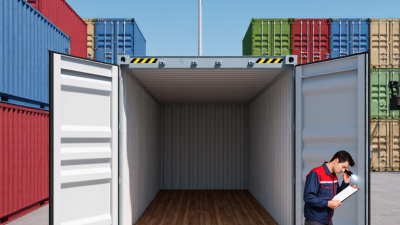
Certification separates dependable equipment from improvised stock. Ask for a current CSC safety plate when international ocean transport is planned. Check the plate number, inspection date, manufacturer details, and maximum gross mass. ISO dimensions also matter for stacking and intermodal handling. During a practical inspection, examine floor boards for soft spots, door seals for gaps, and corner castings for distortion. Rust around welds deserves attention.
Warranty terms reveal how seriously a supplier supports its product. Compare coverage for leaks, structural defects, doors, flooring, and paint failure. A short warranty may indicate older inventory or limited quality control. Still, warranty language can be vague. I would request repair timelines and exclusions in writing. No ranking is flawless. Even a certified container can arrive with damage after transport. Photograph every surface at delivery, including the roof and underside. That simple record can prevent an expensive dispute.