
China has become the central manufacturing base for the global freight container market, supported by deep steel, welding, coating, and logistics capabilities. According to UNCTAD’s Review of Maritime Transport 2024, global container port throughput reached about 858 million TEUs in 2023. That volume reflects constant demand for reliable boxes, not simply cheap production. Drewry’s Container Census research also identifies Chinese factories as the dominant source of new dry containers, commonly representing more than 95% of global output. The exact share varies by year and methodology.
This guide examines China’s leading freight container manufacturers and suppliers through practical buying criteria. These criteria include factory experience, ISO 668 dimensional compliance, CSC safety certification, steel quality, weld inspection, coating performance, and after-sales support. A serious supplier should provide traceable material records, production photographs, test documents, and clear delivery terms. Small details matter. Door seals, corner castings, floor boards, and locking bars often determine field performance. We also consider refrigerated, open-top, flat-rack, and specialized equipment where applicable. Specifications must match the cargo and route.
Price alone is a weak shortcut. The World Bank and S&P Global’s Container Port Performance Index show how delays can affect maritime supply chains, making dependable equipment and responsive communication commercially important. Still, no supplier ranking is perfect. Data can shift. Public information may be incomplete, while advertised capacity can differ from available capacity. Buyers should verify certificates, inspect samples, and compare total ownership costs before placing an order. The aim is a balanced, evidence-informed starting point for global purchasers.
What Defines a Leading Freight Container Manufacturer in China
A leading freight container manufacturer is defined by verified performance, not production volume alone. UNCTAD’s Review of Maritime Transport 2024 reported that global maritime trade grew 2.4% in 2023. This growth increases demand for containers that survive repeated port handling, ocean exposure, and inland transport.
Manufacturers should build against ISO 668 and ISO 1496 requirements. They should also provide valid CSC safety certification for international circulation. In practice, buyers should inspect steel thickness, weld continuity, door alignment, floor strength, and coating coverage. A reliable factory records heat numbers, welding procedures, paint batches, and final inspection results. Traceability matters. It turns a claim into evidence.
The details reveal manufacturing maturity. Check a container before loading: doors should close without force, corner castings should sit squarely, and the floor should feel firm under concentrated weight. Independent testing is valuable, especially for water tightness and lifting points. After-sales support also matters because repairs can disrupt schedules and increase total ownership cost. A cheaper quotation may still hide thinner steel, weaker paint systems, or inconsistent flooring. I would question it carefully. No factory is perfect. Even experienced suppliers can improve inspection discipline, documentation, and response times. Leading manufacturers accept that criticism and measure progress with audit records, defect rates, and customer feedback.
China’s major freight container manufacturers serve a highly concentrated global market. Container xChange industry analysis has estimated that Chinese factories produce more than 95% of the world’s new dry containers. The Container Trade Statistics review also shows China remains central to global box circulation and replacement demand.
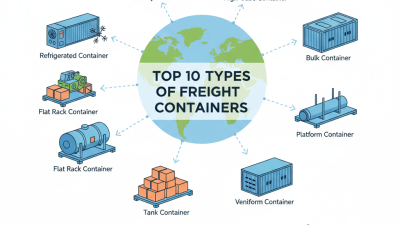
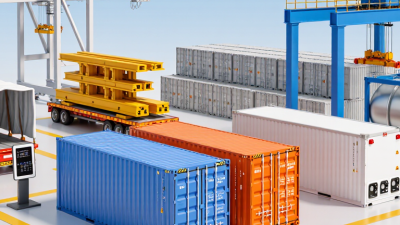
Large manufacturers usually organize production into specialized product ranges. Standard 20-foot and 40-foot dry containers support general cargo, while high-cube units provide extra internal height. Reefer lines add insulated walls, cooling machinery, and temperature monitoring. Open-top and flat-rack containers handle machinery, steel coils, timber, and other oversized loads. Tank containers serve approved liquid transport under strict technical specifications.
Factory selection should involve more than checking price lists. ISO 668 dimensions, CSC safety requirements, corrosion protection, flooring materials, and welding quality deserve physical inspection. The UNCTAD Review of Maritime Transport reports that the global container fleet has reached tens of millions of TEUs, increasing pressure for consistent repairs and replacement units. That scale is impressive. It can also hide uneven quality.
Some manufacturers offer customized colors, door layouts, logos, and interior fittings. However, customization may complicate spare parts and future resale. Buyers should request production records, coating specifications, inspection photographs, and independent test documents. A factory with broad equipment may still lack strong reefer engineering experience. That detail is easy to miss.
Chinese freight container manufacturers commonly supply standard dry containers in 20-foot, 40-foot, 40-foot high-cube, and 45-foot high-cube formats. The chart compares their nominal external dimensions under widely used ISO container specifications. Dimensions are shown in meters and are not company-specific data.
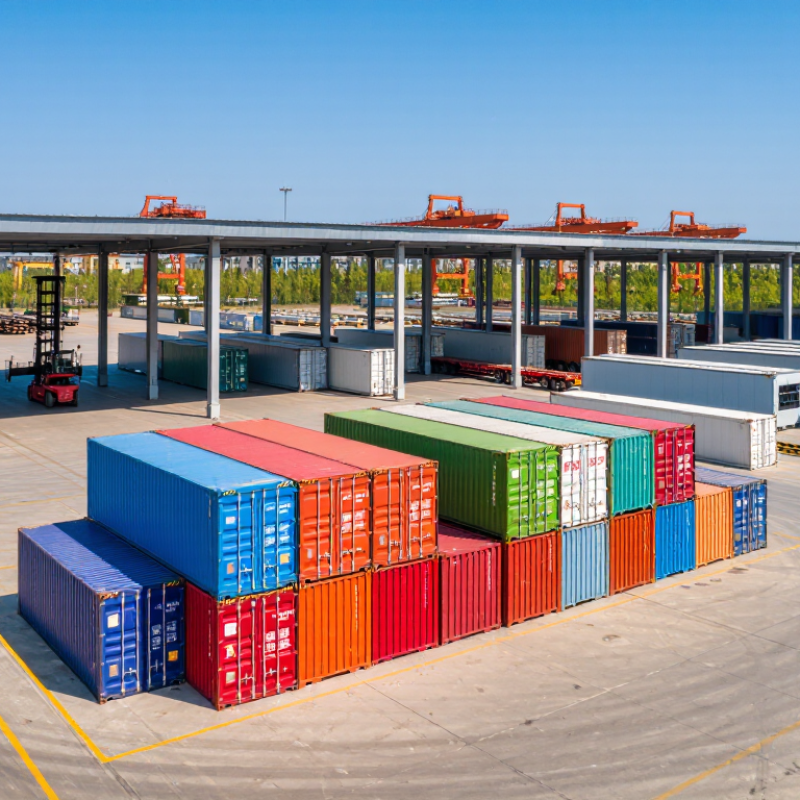
Chinese freight container manufacturers and suppliers offer several container types for different cargo conditions. The standard dry container remains the most widely used option. It protects cartons, machinery, furniture, and palletized goods from rain and dust. Common sizes include 20-foot and 40-foot models, with high-cube versions adding interior height. In procurement work, I check door alignment, floor strength, corner fittings, and coating quality. Small defects can become expensive later.
Refrigerated containers support chilled or frozen cargo through controlled temperature systems. Buyers should examine insulation thickness, cooling performance, power requirements, and alarm functions. Open-top containers suit tall or heavy cargo loaded by crane. Flat-rack containers handle oversized machinery, steel structures, and other difficult loads. Tank containers are designed for approved liquids and require careful attention to material compatibility, inspection records, and operating procedures. Not every supplier handles these types equally well.
Reliable Chinese suppliers usually provide drawings, load data, inspection documents, and clear production photographs. Ask for evidence rather than relying only on catalogue descriptions. Check welding points, gasket condition, locking bars, and container identification details before shipment. A low quotation may hide weaker steel or incomplete testing. Yet no container choice is perfect. I still recheck dimensions with the actual cargo plan, because even a few centimeters can change loading efficiency, transport cost, and safety.
Evaluating Chinese container suppliers requires more than comparing factory prices. UNCTAD’s Review of Maritime Transport 2024 reported continued growth in container shipping capacity, increasing pressure on suppliers to deliver consistent quality. Request factory registration, production capacity, export records, and recent inspection reports. A serious supplier should explain steel grades, welding controls, coating systems, and moisture protection clearly.
Check each container against ISO 668 dimensions and relevant CSC safety requirements. Ask for material certificates, welding inspection records, and load-test evidence. The World Bank’s Logistics Performance Index 2023 emphasizes customs efficiency, shipment reliability, and tracking quality. Therefore, assess communication speed, packing details, document accuracy, and booking performance. A low price can hide weak corrosion protection or expensive port delays.
Inspect a production sample before placing a large order. Look closely at door alignment, rubber seals, floor joints, corner castings, and paint thickness. Independent inspection is useful. It is not optional for unfamiliar suppliers. Contract terms should define tolerances, delivery dates, replacement duties, and payment stages. Some factories provide excellent samples but weaker mass production. That risk is easy to underestimate. A supplier’s quality system may look professional, yet records can remain incomplete. Treat unclear answers as evidence requiring verification, not as minor imperfections.
| No. | Evaluation Dimension | Relevant Benchmark or Requirement | Evidence to Request | Suggested Weight | Recommended Scoring Guide |
|---|---|---|---|---|---|
| 1 | Compliance and Certification | The container should be designed and manufactured in accordance with applicable ISO freight-container requirements and carry a valid Convention for Safe Containers (CSC) safety approval where international ocean transport is required. | CSC safety approval plate, inspection records, design documentation, welding procedures, and certificates issued by an independent or recognized inspection organization. | 18% | 5 = complete and verifiable documentation; 3 = minor gaps; 1 = unavailable or unverifiable documents. |
| 2 | Dimensional Accuracy | Common ISO dry-container external dimensions include approximately 6,058 mm × 2,438 mm × 2,591 mm for a 20-foot unit and 12,192 mm × 2,438 mm × 2,591 mm for a standard 40-foot unit. Actual tolerances must be confirmed in the approved drawing. | Approved dimensional drawings, inspection reports, diagonal measurements, door-opening measurements, and pre-shipment inspection photographs. | 10% | 5 = dimensions verified against approved drawings; 3 = limited measurement records; 1 = no controlled measurement process. |
| 3 | Structural Strength | The frame, corner fittings, side rails, end walls, doors, and understructure should meet the load and handling requirements specified for the intended container type and service. | Structural calculation, corner-fitting test records, load-test results, weld inspection reports, and independent factory inspection findings. | 15% | 5 = documented tests and traceable quality controls; 3 = partial testing; 1 = unsupported strength claims. |
| 4 | Material Specification | Weathering steel is widely used for standard dry containers because it offers improved resistance to atmospheric corrosion. Material selection should match the operating environment and expected service life. | Material certificates, heat numbers, coating specifications, steel thickness schedule, and supplier traceability records. | 8% | 5 = full traceability and approved specifications; 3 = partial records; 1 = materials cannot be verified. |
| 5 | Corrosion Protection and Paint System | The coating system should include controlled surface preparation, primer, intermediate protection where specified, and a durable topcoat suitable for marine exposure. Coating thickness and curing should be inspected. | Paint technical data sheet, surface-preparation standard, dry-film-thickness readings, salt-spray or corrosion-test reports, and coating inspection records. | 10% | 5 = documented multi-stage coating control; 3 = basic coating records; 1 = visible defects or no inspection data. |
| 6 | Water-Tightness and Weather Resistance | Doors, gaskets, roof panels, corner posts, welds, and floor interfaces should prevent water ingress under the intended operating conditions. | Water-test procedure, leak-test records, gasket specifications, door-alignment report, and inspection photographs taken inside the closed unit. | 10% | 5 = every unit tested and documented; 3 = sample testing; 1 = leakage or inconsistent door sealing. |
| 7 | Floor and Interior Finish | Marine-grade plywood or another approved floor material should be properly fixed, dry, undamaged, and compatible with the cargo. The interior should be free from sharp edges, excessive odor, contamination, and loose debris. | Floor-material certificate, moisture-control records, fastener specification, interior inspection checklist, and sample-unit acceptance report. | 8% | 5 = approved material and uniform finish; 3 = minor defects; 1 = damaged, damp, contaminated, or poorly fixed flooring. |
| 8 | Door and Locking Hardware | Door leaves, locking bars, cams, handles, hinges, retainers, and gaskets should operate smoothly and maintain alignment after repeated opening and closing. | Cycle-test records, hardware specification, door-gap measurements, gasket inspection, and functional testing of a representative production sample. | 7% | 5 = smooth operation and documented cycle testing; 3 = minor adjustment required; 1 = binding, misalignment, or damaged hardware. |
| 9 | Production Capacity and Lead Time | Capacity should be evaluated against the requested quantity, container type, customization level, and delivery schedule. A realistic production plan is more important than a large stated annual capacity. | Production schedule, capacity-loading plan, historical on-time delivery data, factory visit report, and written lead-time commitment. | 6% | 5 = capacity and schedule supported by records; 3 = moderate evidence; 1 = vague or unrealistic commitments. |
| 10 | Quality Management System | A controlled quality system should cover incoming materials, welding, dimensional inspection, coating, assembly, final inspection, nonconformance handling, and corrective action. | Quality manual, inspection and test plan, process-control records, nonconformance reports, corrective-action records, and internal audit results. | 5% | 5 = systematic and traceable controls; 3 = basic controls; 1 = inspection depends mainly on final visual checking. |
| 11 | Inspection and Acceptance Process | The purchase contract should define inspection points, sampling methods, acceptance criteria, defect classification, documentation, and the buyer’s right to conduct pre-shipment inspection. | Approved inspection checklist, sampling plan, signed quality agreement, inspection photographs, and final acceptance report. | 4% | 5 = clear contractual controls; 3 = general inspection only; 1 = no agreed acceptance criteria. |
| 12 | Total Cost and Commercial Transparency | The comparison should include unit price, tooling or customization charges, inland transport, export documentation, inspection fees, spare parts, payment terms, and the cost impact of defects or delays. | Itemized quotation, Incoterms® 2020 delivery term, payment schedule, warranty terms, freight assumptions, and written list of exclusions. | 5% | 5 = fully itemized and comparable offer; 3 = some exclusions; 1 = unclear pricing or significant hidden costs. |
| Total Evaluation Weight | 100% | ||||
| Suggested decision rule: Score each dimension from 1 to 5, multiply the score by the suggested weight, and compare the weighted totals. Before placing an order, independently verify the CSC approval, approved drawings, material traceability, production inspection records, and the supplier’s legal and export documentation. | |||||
China’s freight container manufacturers and suppliers should be judged by verifiable standards, not attractive catalog photos. ISO 668 defines container dimensions, while ISO 1161 covers corner fittings and load transfer points. The CSC Convention also requires safety approval before international transport. Ask for valid certificates, weld inspection records, coating specifications, and recent factory test reports. Small gaps matter. A door that closes poorly can damage cargo, delay customs checks, and increase handling costs.
Export service quality deserves equal attention. UNCTAD’s Review of Maritime Transport 2024 reported that maritime trade grew by 2.4% in 2023, while containerized supply chains remained exposed to port congestion and route disruption. Suppliers should provide clear drawings, packing lists, serial-number records, and loading photographs. Confirm whether prices include inland delivery, export documentation, port charges, and insurance. The World Bank’s 2023 Logistics Performance Index used responses from 4,090 logistics professionals across 139 economies. Its findings underline the value of shipment tracking, reliable customs coordination, and predictable delivery performance.
Request references for similar container types and inspect production samples when possible. A low quotation may exclude corrosion protection, spare parts, or final inspection. That is easy to miss. Check steel grade, floor load capacity, ventilation, paint thickness, and repair procedures. Buyers should also compare lead times against production capacity, not promises alone. Some suppliers communicate quickly but provide weak after-sales support. That weakness appears later, when replacement parts are urgently needed.